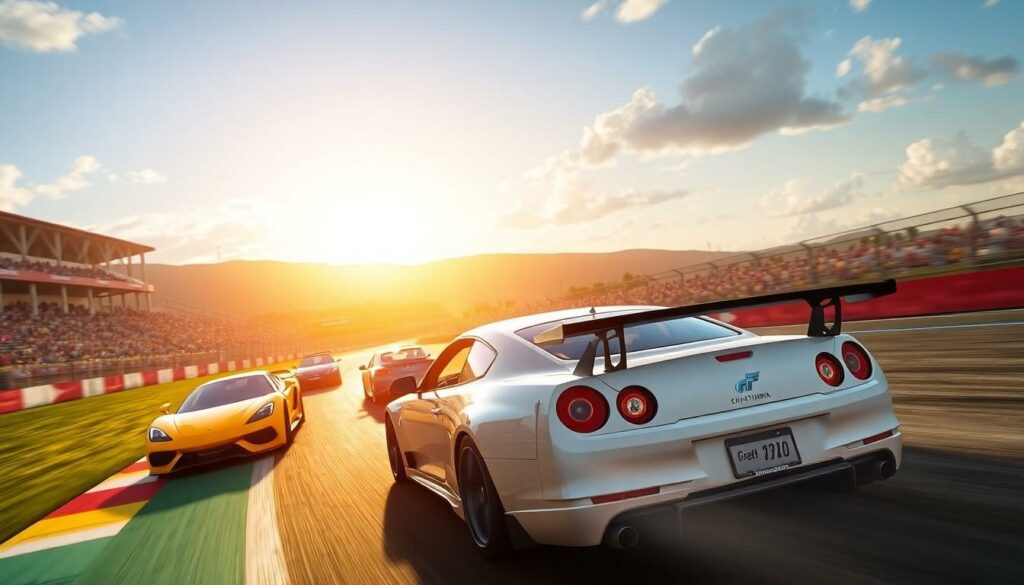
When gamers think of racing games, Gran Turismo often zooms to the forefront. With stunning graphics and a reputation for realism, it’s easy to get lost in the world of high-speed thrills. But as players buckle up, a burning question revs up: is Gran Turismo truly open world?
Overview of Gran Turismo Series
Gran Turismo, a flagship racing game series developed by Polyphony Digital, debuted in 1997. The game quickly gained acclaim for its realistic driving mechanics and stunning graphics. Attention to detail sets Gran Turismo apart, creating an immersive experience for players.
The series features hundreds of meticulously recreated cars from famous manufacturers. Players can customize vehicles to enhance performance, making strategic decisions about upgrades and tuning. Known for its licenses and challenges, Gran Turismo encourages skill development and precision driving.
Racing takes place across various tracks that range from closed circuits to real-world locations. Each iteration introduces new courses and vehicles, keeping the gameplay fresh and engaging. Many players appreciate the single-player campaign, while online racing provides an opportunity for competition with others.
Gran Turismo consistently emphasizes realism, including accurate physics and vehicle behavior. Feedback from the community influences future releases, leading to adaptations that meet player expectations. Gamers enjoy the balance between accessibility for newcomers and depth for seasoned players.
Newer titles in the series explore innovative features and technologies that enhance gameplay. The introduction of virtual reality and improved graphics highlights Gran Turismo’s commitment to pushing industry standards. Despite its structured approach, the vast selection of environments and vehicles allows for diverse racing experiences.
Overall, Gran Turismo remains a significant player in the racing game genre. Its blend of realism, extensive customization, and evolving gameplay ensures ongoing interest among racing enthusiasts. The series continues to captivate audiences, making it a staple in the gaming community.
Gran Turismo Gameplay Experience

Gran Turismo offers a rich gameplay experience characterized by its detailed graphics and realistic driving mechanics. Players engage in track-based racing where courses range from closed circuits to authentic real-world locations.
Track-Based Racing vs. Open World
Track-based racing defines Gran Turismo’s core structure. Most races occur on specific tracks designed for performance and precision. Each course features unique characteristics tailored to challenge players’ skills. Unlike open-world games, Gran Turismo emphasizes structured events with limited exploration. Players focus on mastering tracks rather than wandering through expansive environments. This design choice enhances the sense of competition and realism, inviting players to hone their driving skills within a controlled framework.
Exploration and Free Roaming Elements
While primarily focusing on track-based racing, Gran Turismo includes limited exploration options. Specific areas allow for free roaming, providing players a chance to appreciate stunning visuals and vehicle details. Some titles introduce photo modes enabling users to capture stunning images of their cars in various settings. Customization also encourages exploration through garage management, where players can personalize their vehicles. This layered approach offers elements of freedom within a predominantly structured experience, appealing to both competitive racers and casual players.
What is Open World in Gaming?
Open world in gaming refers to a design that allows players to explore expansive environments without restrictive linear pathways. Players engage in various activities, including completing missions and interacting with the game world organically.
Characteristics of Open World Games
Open world games feature vast exploration spaces that encourage player freedom. Environments often include dynamic weather systems and day-night cycles, enhancing immersion. Objectives may vary, allowing players to approach challenges at their own pace. Non-linear storytelling helps create unique experiences that differ from player to player. Additionally, activities such as side quests or collectibles add depth to the gameplay.
Examples of Open World Racing Games
Popular open world racing games include titles like Forza Horizon and The Crew. Forza Horizon provides a fictionalized interpretation of real-world locations, allowing players to roam freely while participating in events. The Crew offers a vast map based on the United States, featuring shared online experiences and various activities. Both examples exemplify how racing game dynamics can incorporate open world elements, enhancing player engagement and excitement.
Community Opinions on Gran Turismo’s Open World Features
Community feedback highlights a range of opinions on Gran Turismo’s open-world features. Some players appreciate the technical design, noting it emphasizes realism over vast exploration. Others express a desire for more freedom in gameplay, wishing for the expansive environments common in other racing titles.
Many gamers admire Gran Turismo’s focus on detailed tracks. They argue that this dedication enhances the racing experience, making it more immersive. Fans of the series often prefer this structured approach, as it creates a competitive atmosphere. Track mastery becomes a central goal, offering rewarding gameplay.
Conversely, some enthusiasts crave open-world elements. They indicate that the ability to roam could provide an engaging alternative to racing on predefined circuits. Players suggest that incorporating exploration could attract a wider audience, merging casual driving with serious racing.
Players often point out the stunning graphics and vehicle details as standout features of Gran Turismo. Several community members use photo modes to showcase cars in breathtaking visuals. This aspect fosters creativity and enjoyment for those who appreciate automotive aesthetics.
Online forums reflect mixed feelings about the game’s limitations. While the racing mechanics receive widespread acclaim, the absence of an open-world structure stands out. Individuals argue that expanding exploration could elevate the experience, while others appreciate the concentration on racing skill and precision.
Ultimately, community opinions reveal a spectrum of expectations from Gran Turismo. Some value its commitment to realism and accuracy, while others yearn for a more dynamic gaming environment. Balancing these preferences might prove essential for future iterations of the series.
Conclusion
Gran Turismo continues to stand out in the racing game genre with its commitment to realism and detailed gameplay. While it may not fit the traditional definition of an open-world game, its extensive selection of tracks and vehicles offers players a rich experience. The balance between structured racing and limited exploration caters to a wide range of players, from competitive racers to casual enthusiasts.
As the series evolves, the community’s feedback will likely shape future iterations. This ongoing dialogue between developers and players could lead to innovations that blend the best of both structured racing and open-world exploration. Gran Turismo’s legacy remains strong, captivating audiences with its dedication to quality and immersive gameplay.