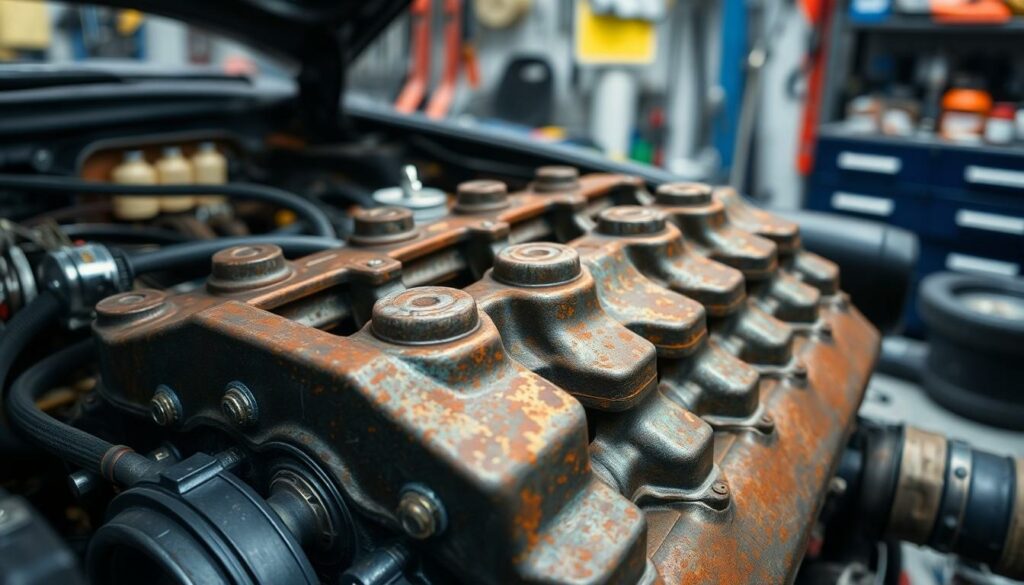
Rust is the sneaky villain lurking in the shadows of your engine, waiting to wreak havoc when you least expect it. If you’ve ever wondered what engine is rust on, you’re not alone. Many car owners find themselves scratching their heads as they battle this pesky foe. Understanding where rust likes to hide can save you from costly repairs and keep your ride running smoothly.
Understanding Rust’s Engine
Rust typically forms on metal components due to moisture exposure. Car owners may overlook the engine’s interior areas, as these are often hidden from view and can accumulate condensation. Engine compartments, including the block, cylinder heads, and exhaust manifolds, are common spots for rust development.
Moisture can penetrate through cracks or gaps. Corrosion accelerates if the engine is not regularly maintained. Engine oil contamination from moisture can lead to significant issues. Failing to address rust can result in diminished performance.
Preventive measures ensure the longevity of engine parts. Regular inspections help identify early signs of rust. Cleaning the engine and surrounding components reduces corrosion risk. Using rust-resistant coatings can provide added protection against moisture and nearly eliminate rust formation.
Awareness of environmental factors plays a crucial role. Humid climates tend to enhance rust formation rates. Proper ventilation in garages can also minimize moisture accumulation.
Understanding the specific areas where rust commonly occurs empowers car owners. This knowledge allows them to take proactive steps. Investing time in regular maintenance prevents rust-related repairs, fostering a healthier engine environment.
Overview of Rust Language

Rust is a modern programming language known for its focus on safety and performance. It efficiently handles memory without a garbage collector, which allows for fast execution.
Key Features of Rust
- Memory safety is enforced through a strict ownership model.
- Concurrency support simplifies writing multitasking applications.
- Pattern matching enhances control flow, making code easier to read.
- An expressive type system helps catch errors at compile time.
- Tooling includes the Cargo package manager that streamlines project management.
Benefits of Using Rust
- Performance levels match those of C and C++, making it suitable for system programming.
- Safety features reduce vulnerabilities, which enhances overall security.
- Copious community support fosters collaboration and resource sharing.
- Cross-platform capabilities enable deployment on various systems without modification.
- Learning resources are widely available, aiding new programmers in mastering Rust quickly.
Engines Compatible with Rust
Rust is compatible with various engines, enabling developers to create efficient applications across multiple platforms.
WebAssembly and Rust
WebAssembly supports Rust, allowing developers to build high-performance web applications. Efficient compilation of Rust into WebAssembly results in faster execution times. This compatibility facilitates the use of Rust’s features in web environments, making it ideal for developers transitioning from traditional languages. Using Rust alongside WebAssembly enhances security, as Rust’s strict memory safety guarantees prevent common vulnerabilities. Additionally, the blend helps create responsive and interactive user experiences on web applications.
Game Engines and Rust
Game engines like Amethyst and Bevy utilize Rust for game development. These engines leverage Rust’s performance and safety features, addressing complex game logic without compromising runtime efficiency. Game developers find Rust’s concurrency capabilities beneficial for creating immersive multiplayer experiences. The growing ecosystem of Rust libraries supports graphics, physics, and sound, providing comprehensive tools for game creation. This trend in game development highlights Rust’s increasing acceptance as a viable option for building scalable, performance-focused games.
Performance of Rust Language
Rust excels in performance, benefiting from its unique features designed to optimize speed and enhance efficiency.
Speed and Efficiency
Speed remains a crucial aspect of Rust. The language’s compilation to machine code ensures quick execution times, rivaling C and C++. Performance-oriented design allows developers to write applications that require minimal overhead while maintaining efficiency. Rust’s ability to eliminate runtime checks leads to faster operations in comparison to many other high-level languages. Compiling ahead of time optimizes the final product, enabling developers to target various platforms with consistent performance levels. Such capabilities prove essential for resource-intensive applications, making Rust a preferred choice among developers aiming for high-speed execution.
Memory Safety
Memory safety defines Rust’s commitment to preventing errors that could lead to crashes or security vulnerabilities. The ownership model enforces strict rules around how memory is accessed and managed, reducing risks associated with dangling pointers or buffer overflows. Borrowing and lifetimes emphasize safe access to memory, allowing developers to write efficient code without sacrificing safety. Compilers catch potential issues during development instead of at runtime, streamlining the debugging process. This unique approach ensures that applications are not only fast but also reliable, contributing to user trust and long-term stability.
Conclusion
Understanding the impact of rust on car engines and the capabilities of the Rust programming language provides valuable insights for both car owners and developers. By recognizing the hidden dangers of rust in automotive engines and implementing preventive measures, car owners can protect their vehicles and enhance performance. Meanwhile, the Rust programming language stands out for its emphasis on safety and efficiency, making it a top choice for modern software development. Its compatibility with various engines and strong community support further solidifies its position in the tech landscape. Embracing both aspects ensures better maintenance of vehicles and the creation of high-quality applications, contributing to overall success in their respective fields.